
When Faith Is Central — and So Is the Pressure
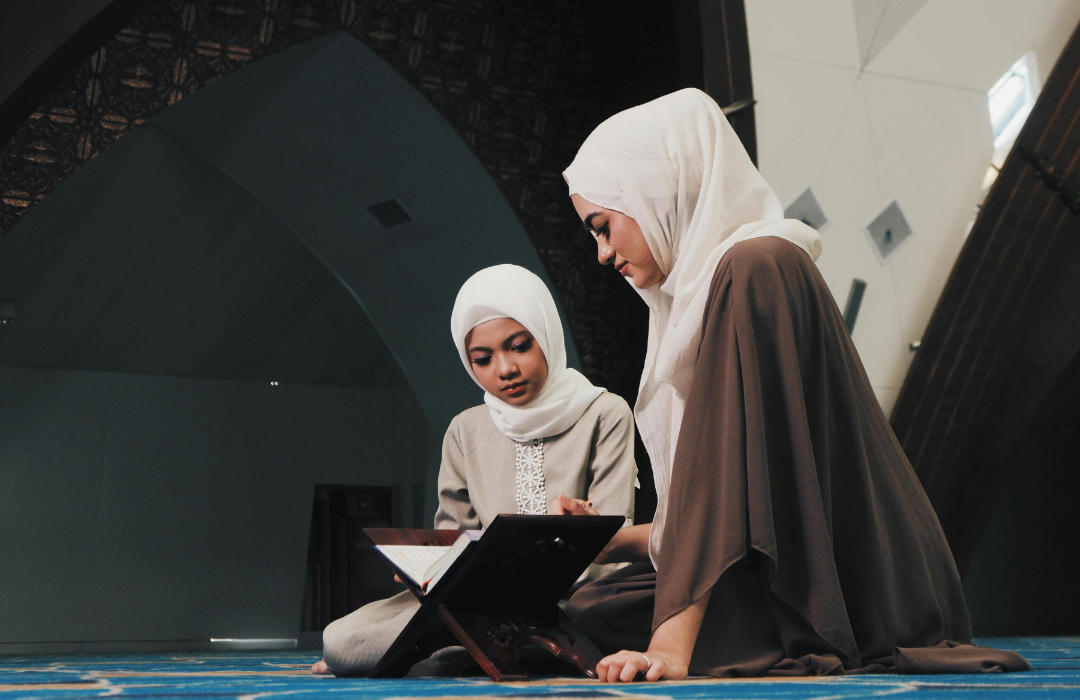
Two women wearing hijabs sit on a mosque floor reading from an open Quran together, reflecting a quiet moment of faith, study, and spiritual connection alongside the weight of religious expectations.
When Faith Is Central — and So Is the Pressure
For many Muslims, faith isn’t just belief.
It’s structure.
Community.
Identity.
A moral compass that shapes daily life.
And yet, living visibly Muslim — especially in Western contexts — often comes with added pressure. To represent well. To explain gently. To stay composed in moments that feel anything but calm.
That pressure doesn’t disappear when you’re devout.
It often intensifies.
Carrying Faith and Fear at the Same Time
Many Muslim clients describe living with a constant low-level alertness.
Not always dramatic. Just persistent.
Being mindful of how you’re perceived.
Bracing for misunderstanding or bias.
Navigating public spaces with awareness that feels inherited, not chosen.
This isn’t paranoia.
It’s lived experience — and it leaves an imprint on the nervous system.
When Emotional Struggle Feels Like a Spiritual Failure
YIn some Muslim communities, emotional suffering is quietly reframed as a lack of faith.
Pray more. Be patient. Trust Allah.
Spiritual practices can be deeply grounding — but they’re not meant to replace emotional care.
Many Muslims internalize the idea that struggling means they’re doing something wrong spiritually, rather than responding normally to stress, trauma, or grief.
Therapy helps separate emotional experience from moral judgment.
The Weight of Community Expectations
Muslim identity often exists within tight-knit family and community systems.
Support can be strong — but so can expectation.
You may feel pressure to:
protect family reputation
prioritize collective needs over personal ones
remain composed and grateful
avoid naming pain that might disrupt harmony
Over time, this can make emotional expression feel risky.
Therapy offers a space where honesty doesn’t threaten belonging.
Faith and Mental Health Are Not Opposites
Therapy at Repose does not ask you to set your faith aside.
It honors it.
Muslim-affirming therapy understands that faith can be a source of resilience — and that spiritual strength doesn’t cancel out nervous system stress.
Both can exist at the same time.
What Muslim-Affirming Therapy Looks Like at Repose
Therapy for the Muslim community at Repose is culturally attuned, spiritually respectful, and nervous-system-informed.
Sessions may focus on:
navigating identity, faith, and belonging
processing anxiety, grief, or trauma without shame
exploring family and community dynamics
regulating stress related to discrimination or visibility
integrating emotional care with spiritual values
You don’t have to explain your faith here.
It’s already understood as part of you.
Rest Is Not a Lack of Trust
One of the most common fears Muslim clients carry is that needing support means a lack of tawakkul — trust.
Therapy gently reframes this.
Caring for your emotional well-being is not a rejection of faith.
It’s stewardship of the body and mind you’ve been entrusted with.
A Place to Be Fully Yourself
Muslim therapy creates room for complexity.
For devotion and doubt.
For strength and exhaustion.
For faith and feeling.
You don’t need to choose between your inner life and your beliefs.
You deserve care that honors both.
→ Explore Muslim-affirming therapy focused on emotional well-being, identity, and nervous system care at Repose.