
Healing Doesn’t Have to Happen Alone
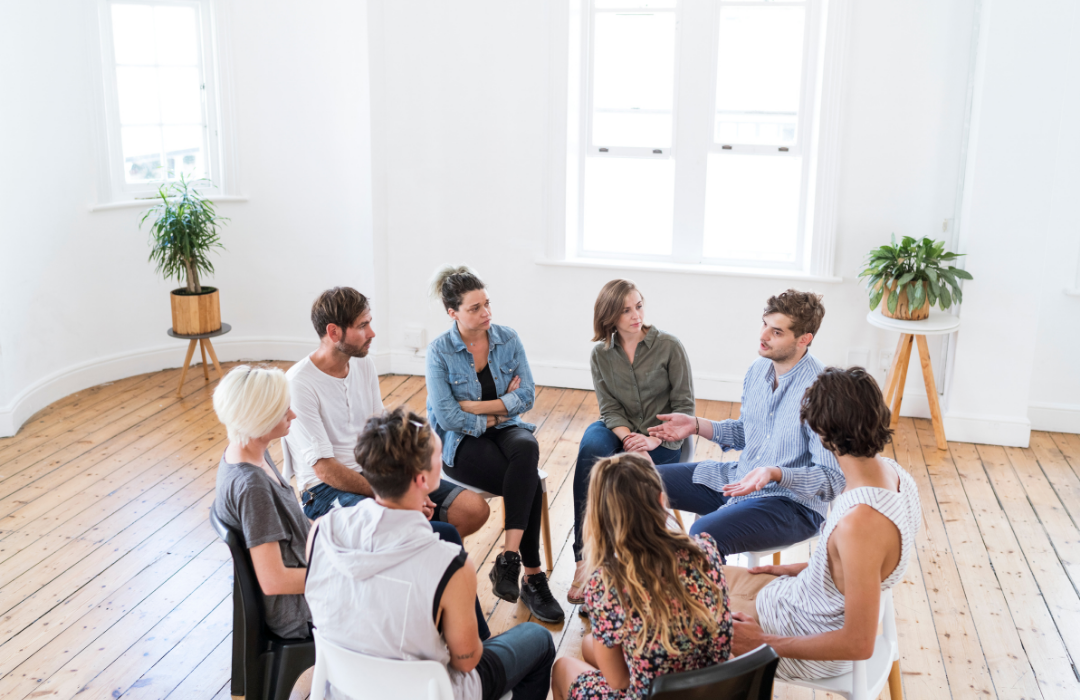
A small group of adults sits in a circle in a bright, calm room, listening as one person speaks—reflecting shared support, open conversation, and the collective nature of healing.
Healing Doesn’t Have to Happen Alone
There’s a version of healing we’re often sold that’s deeply individual.
One person. One therapist. One private process.
And while individual therapy can be powerful, it’s not the only way people heal.
Sometimes, healing happens in rooms with other bodies. In shared breath. In being witnessed without explanation.
Groups and classes offer something different — and often deeply regulating.
Why Being With Others Can Feel So Relieving
Modern life is isolating by design.
We process everything internally. We self-regulate alone. We carry stress quietly.
Group settings gently interrupt that isolation.
You’re reminded:
you’re not the only one feeling this way
your experience is legible to others
your nervous system responds to co-regulation
Being in a room — virtual or physical — where others are also slowing down can shift something immediately.
Collective Regulation Is Still Regulation
The nervous system is social.
We learn safety through others — through tone, rhythm, proximity, shared presence.
Groups and classes create opportunities for:
grounding together
moving together
resting together
reflecting without pressure
You don’t have to share everything to benefit.
Sometimes, listening is enough.
When Groups Feel More Accessible Than Therapy
For some people, individual therapy feels like too much.
Too vulnerable. Too intense. Too unstructured.
Groups and classes offer a softer entry point — a way to receive support without putting everything on the table.
They can be especially helpful if you:
want support without weekly commitment
feel comforted by shared experience
are curious about somatic or movement-based practices
want to build regulation skills in real time
are easing into deeper therapeutic work
Care doesn’t have to look one way.
What Groups & Classes Look Like at Repose
Repose offers groups and classes designed to support nervous system regulation, embodiment, and emotional well-being.
These offerings may include:
somatic-based practices
movement and breathwork
psychoeducation in community
facilitated discussion and reflection
creative or restorative experiences
They’re intentionally structured — not performative, not overwhelming.
You’re allowed to participate at your own pace.
You Don’t Have to Speak to Belong
One of the most common fears people have about groups is being put on the spot.
At Repose, participation is invitational.
You can speak.
You can listen.
You can simply be there.
Belonging doesn’t require disclosure.
Presence is enough.
Care That Extends Beyond the Therapy Room
Groups and classes help integrate care into daily life.
They offer practices you can return to. Rhythms your body can recognize. A sense of continuity that doesn’t end when a session does.
This kind of support can be deeply stabilizing — especially during periods of transition or stress.
Finding Support in Shared Space
Healing isn’t always private.
Sometimes it’s collective. Sometimes it’s quiet. Sometimes it’s just being in the same room, breathing at the same pace, feeling less alone.
Groups and classes offer that possibility — without pressure, without comparison.
You don’t have to do this by yourself.
→ Explore groups and classes focused on nervous system regulation, embodiment, and community support at Repose.