
Anxiety Is Not a Personal Failure — It’s a Nervous System Pattern
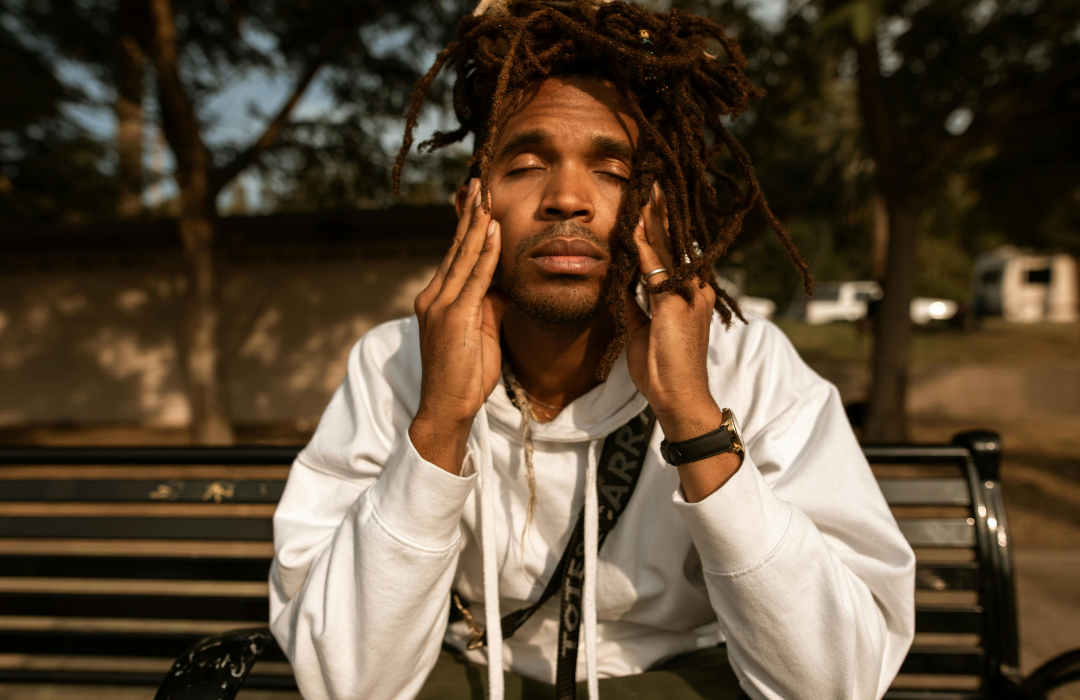
A man sitting outside with eyes closed and hands on his face, appearing overwhelmed and taking a moment to ground himself.
Anxiety Is Not a Personal Failure — It’s a Nervous System Pattern
Anxiety gets framed as overthinking. As weakness. As something you should be able to control if you just tried harder.
But anxiety isn’t a lack of discipline or a mindset issue.
It’s a nervous system that learned to stay alert — and never quite learned how to turn that off.
Many people with anxiety aren’t imagining danger.
Their bodies are responding as if danger is already here.The Habit of Bracing
Many people living with trauma don’t identify as “traumatized.”
Why Anxiety Feels So Physical
Anxiety doesn’t just live in the mind.
It lives in:
a tight chest
shallow breathing
racing thoughts that won’t slow down
a stomach that never quite settles
a constant sense of anticipation
You can tell yourself you’re fine — and still feel completely on edge.
That’s because anxiety is rooted in physiology, not logic.
The nervous system is doing what it was designed to do: protect you.
The problem is that it doesn’t always know when the threat has passed.
When Coping Skills Aren’t Enough
Most people with anxiety already know the tools.
They’ve tried:
deep breathing
positive thinking
grounding exercises
distraction
pushing through
Sometimes these help. Often, they don’t last.
Because anxiety doesn’t come from a lack of coping skills — it comes from a system that’s been overactivated for too long.
Anxiety therapy works by addressing the underlying patterns that keep the body stuck in vigilance.
Anxiety Is Often a Sign of Burnout
For many people, anxiety isn’t sudden.
It builds slowly.
Years of:
high pressure
emotional responsibility
people-pleasing
overfunctioning
living in anticipation instead of presence
Eventually, the nervous system forgets how to downshift.
Rest feels uncomfortable.
Stillness feels unsafe.
Silence feels loud.
Anxiety therapy helps the body relearn regulation — not by forcing calm, but by restoring flexibility.
You’re Not “Too Sensitive”
Many people with anxiety have been told they’re too sensitive, too reactive, too much.
In reality, they’re often deeply attuned — to environments, relationships, and subtle shifts others overlook.
Anxiety therapy helps separate intuition from hypervigilance.
It helps you learn when your system is responding to real information — and when it’s responding to old conditioning.
Regulation Over Reassurance
Reassurance rarely works long-term for anxiety.
Because anxiety doesn’t need proof — it needs safety.
A regulated nervous system can feel uncertainty without spiraling.
It can tolerate emotion without panic.
It can rest without scanning for what’s next.
This is what anxiety therapy supports over time.
Not control.
Not suppression.
But capacity
A Slower, More Sustainable Way Forward
Healing anxiety isn’t about becoming fearless.
It’s about becoming grounded.
About learning how to move through life without living on high alert. About trusting your body again.
You don’t need to force yourself to calm down.
Your nervous system just needs the right kind of support.
→ Explore anxiety therapy for nervous system regulation and emotional resilience at Repose.